


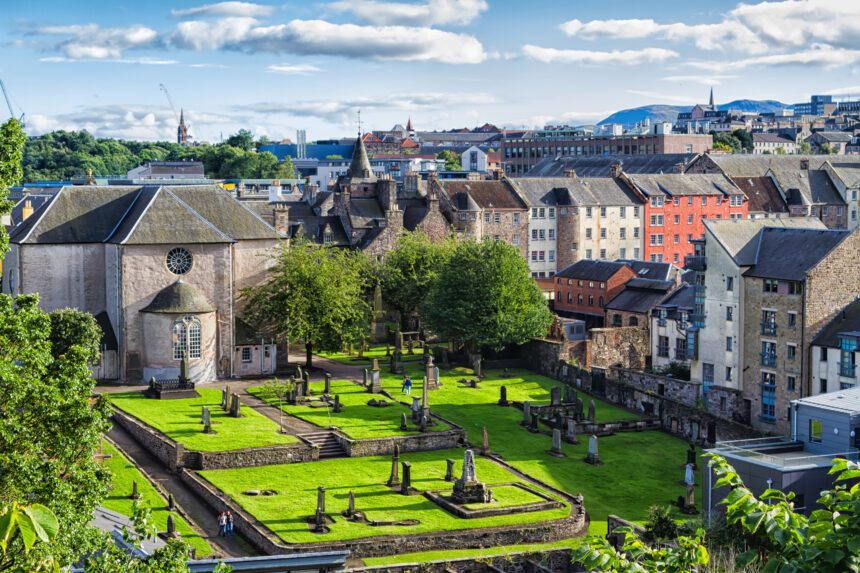
Every August, Edinburgh undergoes a transformation that few cities would willingly endure and even fewer could successfully accommodate. Theatres expand into basements and back rooms, university buildings become temporary performance spaces, and pubs, churches and hotel conference rooms acquire makeshift stages. For several weeks, the ordinary geography of the city is replaced by a vast and unpredictable cultural marketplace.
At the centre of it is the Edinburgh Festival Fringe, an institution founded in 1947 on the principle that artists should not need an invitation to perform.
Nearly eight decades later, that principle exists within a radically different cultural environment. New performers no longer depend entirely on theatres, broadcasters, publishers or festival programmers to reach an audience. Digital platforms have lowered the barriers to distribution. A comedian recording material in a bedroom can reach more people in an afternoon than many theatre productions will encounter during an entire run.
This raises an obvious question. What purpose does a festival devoted to physical performance and artistic discovery serve when discovery itself has become instantaneous, global and largely controlled by algorithms?
The answer lies in the distinction between attracting attention and developing work.
A Festival Built on Risk
The Fringe occupies an unusual position in the cultural economy. It is simultaneously a festival, a marketplace, a testing ground and, for many performers, an endurance exercise.
Artists arrive with finished productions, unfinished ideas and everything in between. Some perform to full houses. Others spend weeks playing to audiences that could comfortably fit around a kitchen table.
The absence of guarantees is central to the character of the festival.
Contemporary digital culture is increasingly shaped by systems designed to identify and amplify what audiences are already likely to enjoy. Recommendation algorithms reduce uncertainty. Streaming services suggest the next programme. Social platforms learn which subjects, personalities and formats are most likely to hold attention.
The Fringe operates according to a more disorderly logic.
Audiences make decisions based on reviews, recommendations, posters, conversations and chance encounters. A production with little publicity can acquire momentum during the festival. A heavily promoted show can disappear without making an impression.
This unpredictability is not an inefficiency that technology has yet to solve. It is one of the festival’s most important functions.
Culture depends on spaces in which uncertain ideas can be tested.
The Difference Between Exposure and Development
The internet has created unprecedented opportunities for performers to find audiences independently. It has not eliminated the need for artists to develop their craft.
Live performance imposes disciplines that digital distribution does not.
A comedian performing repeatedly over several weeks learns where an audience’s attention weakens. A playwright discovers whether the structure that worked on the page survives contact with a room. Performers learn how material changes when presented to different audiences.
The feedback is immediate and sometimes uncomfortable.
There is no analytics dashboard capable of softening the silence after a joke fails.
This process of repetition, failure and revision has always been part of artistic development. The unusual concentration of performances at Edinburgh accelerates it.
The Fringe therefore remains important not simply because careers are launched there, but because work is changed there.
The distinction matters. Modern cultural industries are increasingly effective at finding marketable personalities. They are less effective at providing environments in which artists can experiment repeatedly without the expectation that every attempt must immediately succeed.
Discovery Without an Algorithm
The contemporary media environment offers audiences more cultural choice than at any previous point in history. Paradoxically, greater choice has increased the influence of intermediaries.
Algorithms determine which songs are recommended, which videos appear on screens and which television programmes are promoted. The systems are efficient because they reduce an overwhelming supply of culture into manageable selections.
But efficiency has consequences.
Recommendation systems frequently reinforce existing preferences. Audiences are shown variations of things they have previously watched, liked or shared. Cultural discovery becomes increasingly personalized and, as a result, increasingly predictable.
The Fringe offers a temporary alternative.
The festival’s scale makes comprehensive planning impossible. Audiences inevitably encounter unfamiliar performers, unexpected subjects and forms of entertainment they might never deliberately seek online.
Some of these encounters are disappointing.
Others become the reason people return.
The possibility of discovering something genuinely unexpected remains one of the festival’s strongest cultural arguments.
Edinburgh as a Temporary Creative Capital
The significance of the Fringe extends beyond individual performances.
For several weeks, the city becomes one of the world’s most concentrated gatherings of performers, producers, writers, critics, agents and audiences.
The result is an informal cultural infrastructure that is difficult to measure.
Careers can change because someone important attends a performance. Productions find international partners. Writers meet future collaborators. Conversations in bars and cafés develop into projects months or years later.
The digital economy has made professional communication easier, but communication is not the same as proximity.
Creative industries continue to depend heavily on places where people repeatedly encounter one another. Film festivals, book fairs, art fairs and music conferences persist partly because physical concentration produces opportunities that scheduled online interactions rarely reproduce.
The Fringe is one of the largest and least controlled examples of this phenomenon.
The Economics Threatening the Experiment
The greatest challenge facing the festival may not be technological competition but economics.
Edinburgh is an expensive city during August. Accommodation, travel, venue hire, production costs and marketing can make participation financially difficult for emerging artists.
This creates a fundamental tension.
The Fringe’s cultural reputation depends on openness. Its mythology is built around the possibility that an unknown performer can arrive with a small production and leave with a career-changing opportunity.
That promise becomes less credible if participation is increasingly limited to artists with personal wealth, institutional support or the ability to absorb significant losses.
The issue is larger than the Fringe itself.
Across the cultural industries, economic barriers determine who can afford to spend years developing work, accepting poorly paid opportunities and building professional networks.
A festival cannot claim to discover new voices indefinitely if large numbers of potential participants cannot afford to enter the room.
The long-term relevance of the Fringe will therefore depend partly on whether its economic model can preserve meaningful access for emerging artists.
The Value of Cultural Institutions in an Age of Platforms
The rise of TikTok and other digital platforms has transformed how culture circulates. It has not removed the need for institutions that allow culture to develop.
Platforms are exceptionally effective distribution systems. They can connect artists with enormous audiences and allow creative work to cross borders almost instantly.
But platforms are not neutral public spaces. Their commercial incentives favour attention, frequency and engagement. What succeeds within those systems is shaped partly by what can be produced quickly, consumed easily and circulated widely.
Festivals operate differently.
They create temporary environments in which audiences commit time and attention to work that may be unfamiliar, difficult or unsuccessful.
That function is increasingly valuable.
A healthy cultural ecosystem requires more than efficient distribution. It requires places where artists can experiment, audiences can encounter uncertainty and new work can develop before its commercial value is known.
Why the Fringe Endures
The Edinburgh Fringe is not important because it represents an alternative to the internet.
The distinction is no longer meaningful. Artists move constantly between physical and digital spaces, using online platforms to promote performances, build audiences and extend the life of their work beyond the festival.
The Fringe matters because it performs a function that digital platforms do not.
It concentrates artists and audiences in one place. It allows unfinished ideas to compete with established productions. It creates opportunities for discovery that are not entirely determined by previous behaviour. Most importantly, it provides a public environment in which creative work can succeed, fail and change.
The festival’s future is far from guaranteed. Rising costs threaten accessibility. Commercial pressures risk narrowing the range of artists able to participate. Edinburgh itself must balance the economic benefits of international cultural tourism with the pressures placed on residents and infrastructure.
These are substantial problems, and the festival’s reputation should not exempt it from scrutiny.
Yet the central idea behind the Fringe remains remarkably durable.
Culture needs places where people can encounter work they were not expecting to see and where artists can attempt things without knowing whether they will succeed.
In an age when technology is increasingly capable of predicting what audiences will watch next, the continued existence of a festival built on uncertainty may be more than a historical curiosity.
It may be precisely what makes the Edinburgh Fringe necessary.